
To buy accessories and spare parts for concrete pumps and mixers, the main priority is to measure the thickness of the anti-wear sheets, the hardness of the cutting material according to Rockwell C and the exact coordination with the chassis hydraulics. The choice of low-quality or simulated material in consumable parts such as rock and ring cutters leads to an instant drop in the working pressure of the system and hydraulic gearing during continuous concreting. Expert examination of standard dimensions and type of alloy at the source of supply reduces the risk of stopping the concrete transport fleet by 70%.
Operational experience in concreting of mass construction projects shows that the highest depreciation in the concrete transportation and pumping fleet is caused by the physical wear of broken granular materials on ordinary steels. When a Schwing or Putzmeister concrete pump suffers from loss of flow or loss of pistons, most drivers and operators blame the mother hydraulic pump, while in 90% of our workshop inspections in palm repairs, micrometer wear traces are observed on the eye plate, ring cutter or rubber piston. This same hidden erosion increases the cost of diesel fuel and severely destroys the mixing efficiency.
1. genealogy of concrete pump parts; From the glasses plate to the mast tubes
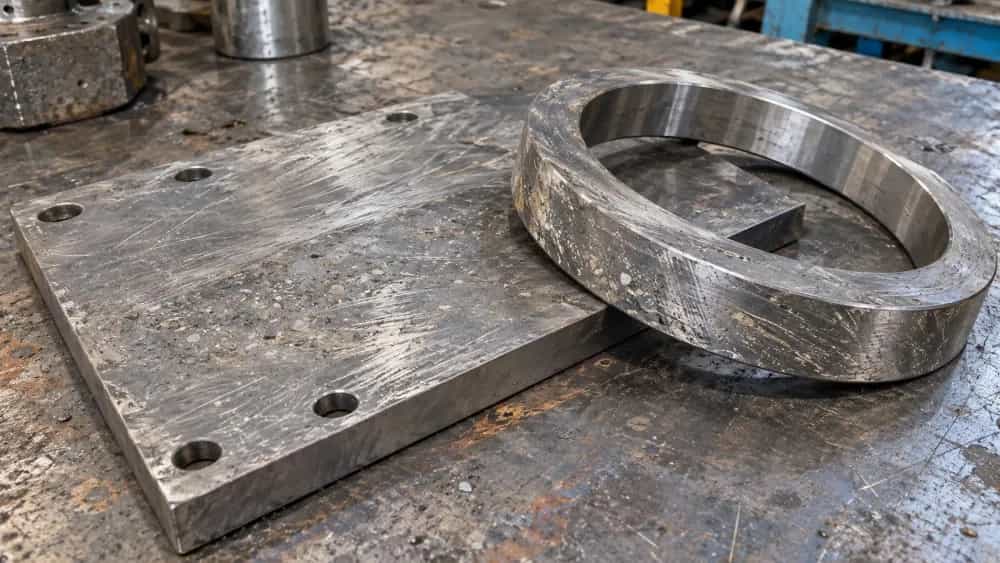
In the daily operation of Satori and Svalve pumps, there are parts that endure severe friction caused by the working pressure of 200 to 350 bar hydraulics. Spectacle Plate and Cutting Ring are at the forefront of concrete entry. The base material of these parts is usually hardened steel with tungsten carbide welding. In the spare parts market, ordinary casting products with a painted appearance are abundant, which after pumping only 1000 cubic meters of almond-grained concrete lose their cutting edges and cement leachate begins to leak into the hopper.
Twin rubber pistons also suffer from fatigue cracks and surface spalling due to the heat caused by continuous friction with the concrete cylinder. Hard chrome cylinder wall wear will be accelerated if the piston rubber is not made of polyurethane or aramid fiber reinforced rubber. The cost of early replacement of a pair of chrome cylinders is much heavier than the price of buying a few quality rubber pistons; Therefore, the evaluation of elasticity, shore hardness (Shore A) between 85 and 92 and abrasion resistance is considered the primary test before installation on the stroke pump.
2. Concrete mixer hydraulic and mechanical bottlenecks; Depreciation of blades and gearbox
Truck mixers, despite their seemingly simple mechanism, have complex mechanical challenges in terms of the angle of the vanes inside the pot, the rollers under the pot and the hydrostatic of the driver. Internal spiral vanes are usually made of 16Mn manganese steel sheets or 400 Brinell wear-resistant sheets (such as Hardox). During the field monitoring, it has been determined that the wear of the blades starts from the outer edge of the welding strip. This wear changes the geometry of the discharge and instead of directing the concrete towards the exit shot, it is locked in the bottom of the drum and so-called clumped.
The rollers transfer the gross weight of the boiler with concrete (which sometimes exceeds 30 tons) to the chassis. Double roller bearings inside the rollers work in an environment full of cement dust, slurry and acid detergents. The use of unbreakable cast iron rollers (Ductile Cast Iron) with double-sided waterproof packings and greasing with lithium complex base greases is the only way to prevent premature corrosion of the balls and sudden locking of the boiler while moving in road traffic.
Concrete mixer gearbox (PMP, ZF or Saer Danfoss solar gearbox) converts the power of the piston hydraulic motor into smooth rotation with a high conversion ratio. Common defects in these gearboxes include broken gears of the planetary floors and burning of the solar bearing due to poor quality oil. When supplying the hydraulic pump and hydraulic motor of the truck mixer, controlling the health of the piston seat and the output shaft slack, it guarantees the maintenance of the torque and the continuous rotation of the concrete without losing the quality of the stamp until it reaches the foot of the workshop.
3. Identification of various parts of the main items in the market of iron and industrial equipment
Industrial alloys have a similar appearance, but their performance under yield stress and dynamic wear is completely different. One of the most common risks in purchasing spare parts is selling ordinary structural steels (ST37) instead of anti-wear plates or unheat-treated carbon steels instead of hard-machined parts. In workshop environments without quantum measurement devices, the originality of the material can be checked with several practical evaluations.
First, a simple file test or a portable hardness tester is necessary to check the cutting ring and connecting rods; Real carbide material should not be scratched with a steel file. The second point is the machining quality of the bearing seat and the drive shaft's teeth. The original and standard parts have threads and turning without pleats with micrometer tolerance, while in non-standard examples, the slackness of the drive shaft causes damage to the gearbox shell and sealing felt cups.
Another important factor is the quality control of the grade of polymers in hydraulic pressure hoses and sealing tapes. Concrete pump hoses are required to have at least 4 layers of steel braided wire and a burst pressure approval of more than 4 times the system's rated pressure. Buying hoses that do not have a standard engraved mark, in the case of sudden return pulses of the solenoid valve, brings the risk of sudden rupture and irreparable occupational accidents.
4. Preventive strategies to increase the life of parts in contact with cement mortar
Precipitation of cement and initial setting of grains on metal contact surfaces combines chemical wear and oxidation with physical wear. Operators who do not wash the circuit with a sponge ball, wash lubricants and inspect the condition of the eyeglass rim immediately after pumping, reduce the useful life of their consumables by half. The drying of the concrete behind the rubber pistons causes the edge of the elastomer to be cut in the next round trip.
Timely adjustment of the air gap (Gap Clearance) between the glasses plate and the cutting rim is the second critical strategy. In most S-valve pumps, the rear shaft adjustment nut allows the operator to prevent concrete sap from escaping into the water chamber by reducing the clearance due to wear. A delay in this simple workshop regulation causes the concrete pressure to push back inside the hopper and bend the valve rod under angular pressure.
Using automatic lubrication system or standard grade lubrication for torque transmission bearings and bushings prevents the penetration of water contaminated with silica particles. If the selected grease has poor thermal resistance, it will be lubricated due to continuous heat and the hydraulic cylinder of the valve actuator will work without lubrication, which will lead to shaft failure and hydraulic oil leakage in a short period of time.
5. Economic and technical checklist for ordering parts for employers and shipping fleets
Purchasing spare parts for pumps and mixers should not be done solely on the basis of unit price comparison, but the total cost of ownership (TCO) including vehicle sleep, mechanic's wages and concrete delivery delay penalty should be the decision criterion. Stopping a truck mixer carrying concrete in the heat of summer can lead to spoilage of the entire load, concrete getting stuck in the pot and causing damage of several hundreds of millions; Therefore, keeping critical parts in the warehouse of the workshop is a management principle.
Parts such as hydraulic fuses, pressure-relieving bypass hoses, coupling rubber, washing sponge ball, hydraulic pump sealing o-rings and a spare ring and piston should always be available in the device's emergency box. Buying these parts from experienced industrial and specialized centers such as Nakhli Repairs, which provide the possibility of monitoring the material and matching the alloy with the standard of the manufacturer, will prevent the imposition of costs caused by non-standard parts.
Spare part | Alloy / standard consumables | Operational useful life (average) | Main sign of failure and wear and tear | The risk of buying miscellaneous materials |
Spectacle Plate | Alloy base steel with tungsten carbide coating | 20,000 to 35,000 cubic meters of concrete | leakage of cement sap into the water box and pressure drop | plate breaking at high pressure and damage to the valve shell |
ring Cutting Ring | Tungsten carbide ring with a hardness of 62-65 HRC | 15,000 to 25,000 cubic meters of concrete | Filling of sharp edges and recoil Material | Ring crushing and blockage of valve rotation flow |
Twin rubber piston | Rubber reinforced with cord yarn or anti-wear polyurethane | 8,000 to 12,000 cubic meters of concrete | Concrete and water entering the cooling chamber of the jack | Line falling on the hard chrome cylinder and concrete suction drop |
Concrete mixer blades | Antiwear sheet Hardox 400 or 16Mn manganese steel | 2 to 3 years (depending on the hardness of the aggregate) | Thinning Edges and remaining load at the bottom of the boiler | Change the shape of the vane, reduce the quality of mixing and gearpage of the boiler |
Making transmission pipes | Seamless alloy steel with hard inner layer (double layer) | 30,000 to 50,000 cubic meters of concrete | Thinning of the pipe wall and ruptures in the elbows | Bursting of the pipe at height and the occurrence of life and death accidents financial |